
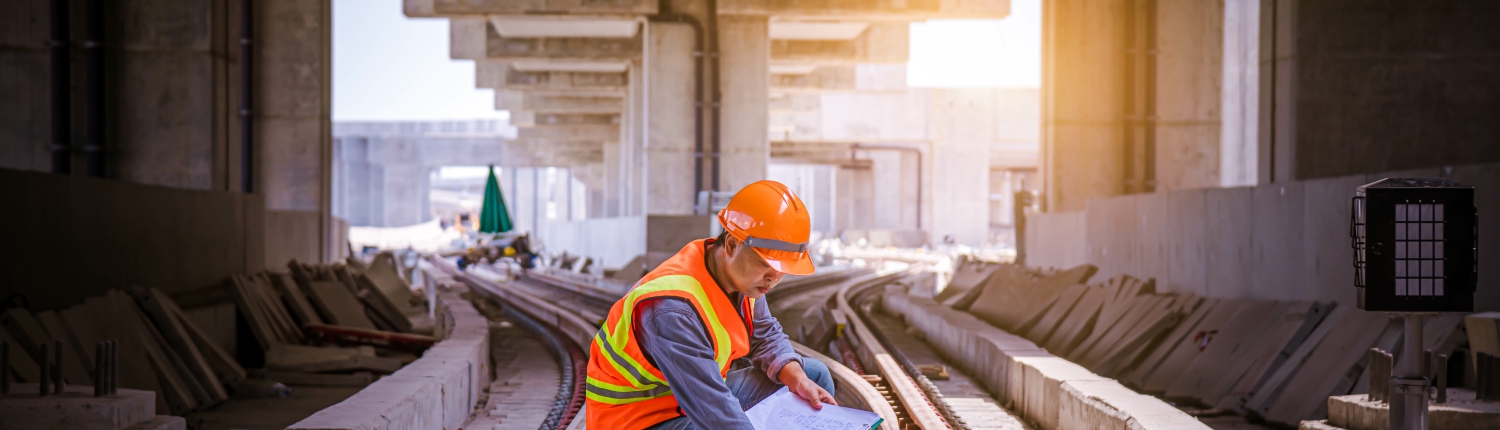




Traditional survey techniques and automated monitoring systems can be deployed to suit clients requirements to capture movement, cant, twist and settlement.
Efficient monitoring solutions can provide advanced warning systems to manage risk of a dangerous event.
Data collected is reported with reference to supplied tolerances ensuring compliance is met. Also providing a comprehensive view of track and infrastructure health.
A groundwater monitoring bore is a specialised borehole constructed not for water supply but specifically to access underground aquifers for measurement and sampling purposes. Groundwater monitoring bores are specialised wells accessing underground aquifers, designed to measure groundwater levels, pore water pressure, groundwater flow direction, and groundwater quality parameters including salinity, pH, electrical conductivity, dissolved oxygen, and contaminants. They are essential tools for environmental management, regulatory compliance, and sustainable groundwater management. Monitoring bores are essential for protecting groundwater sources from contamination and provide real-time data crucial for groundwater management.
Key components include appropriately sized casing (typically 50 mm or larger internal diameter), screened intervals matched to formation characteristics, filter pack, annular seals, and surface headworks. Monitoring wells are small-diameter boreholes for groundwater access and can be installed at various depths for different purposes. Typical diameters for monitoring wells range from 2 to 6 inches.
Water bores (production bores) are designed to extract groundwater for water supplies – irrigation, drinking water, industrial use. They prioritise flow rate, volume, and long-term yield. Monitoring bores serve a fundamentally different purpose: they are constructed to measure and sample groundwater without significantly altering aquifer conditions.
Construction standards differ substantially. Monitoring bores have stricter requirements for casing materials, screen design, sealing, and prevention of cross contamination between aquifer zones to protect data integrity. They must comply with environmental approvals and regulatory guidelines that focus on data quality rather than extraction performance. The Minimum Construction Requirements for Water Bores guide bore installation standards for both types, but monitoring bore design prioritises representative measurement over water production.
Depth depends entirely on the hydrogeological objectives and target aquifer characteristics. The bore must intercept the aquifer or formation zone of interest, with screens positioned below the lowest historical water table by a suitable margin – often at least 3 m. In WA mining contexts, monitoring bores are commonly drilled to 50–60 m to reach bedrock aquifers, though shallower installations may be appropriate for water table monitoring in unconfined aquifers.
Multi-level monitoring installations allow measurement at multiple depths within a single borehole, providing vertical profiles of pressure and water quality without drilling separate bores for each zone. Monitoring wells can be installed at various depths for different purposes, and the optimal configuration should be determined through careful planning and hydrogeological assessment during the design phase.
Modern vibrating wire piezometers with temperature compensation typically exhibit less than 0.025% full scale per °C error, providing highly accurate pore water pressure measurement. CT2X sensors deliver continuous water level, conductivity, and temperature data with specifications suitable for regulatory compliance.
Accuracy depends not only on sensor specifications but also on installation quality, calibration procedures, and ongoing data correction. Groundwater monitoring must align with data quality objectives for compliance, and our quality assurance procedures include temperature compensation, barometric pressure correction, density adjustments for deep or saline bores, and periodic verification against manual dip measurements. Environmental regulators issue compliance guidelines for groundwater monitoring, and our datasets are structured to meet these requirements. Monitoring wells help detect pollutants and assess contamination spread with the precision that regulatory authorities demand.
Regular maintenance ensures long-term system performance and data quality. Key activities include periodic inspection of headworks and casing integrity, checking that screens and sensors are not blocked by sediment or mineral precipitation, verifying sensor calibration against reference measurements, managing telemetry battery and solar power systems, and cleaning sensors as needed.
Bore development may need to be repeated if sediment infiltration degrades water quality parameters. Telemetry systems require firmware updates, communication checks, and power supply maintenance. Monitel provides scheduled maintenance programs tailored to site conditions, with rapid response capability for unplanned issues. A well-maintained monitoring bore network delivers reliable data for the full project lifecycle.
If unreliable monitoring data, compliance risk, or fragmented contractor management is costing your project time and money, the next step is straightforward.
Contact Monitel to discuss your site-specific requirements. We’ll assess your groundwater monitoring needs and design a solution that delivers defensible, audit-ready data from day one – whether you need a single monitoring bore or a network spanning dozens of sites.
Our complete groundwater monitoring solutions cover everything from initial hydrogeological assessment through bore design, installation, commissioning, and long-term automated monitoring with ongoing support. Browse our groundwater monitoring equipment to see the instrumentation options we deploy across WA mining and infrastructure projects.
No data gaps. No compliance surprises. Just groundwater monitoring that works.