
Reliable Groundwater Monitoring Bores Without Compliance Risk
Request a Monitoring Consultation
Whether you're planning a new project or upgrading an existing monitoring system, our experts are here to help.

Groundwater Monitoring Bores Built for WA Mining and Infrastructure Projects
If you’re managing groundwater monitoring across a mine site, tailings storage facility, or major infrastructure project in WA, you already know the cost of getting it wrong. Sensor drift from poor installation, data gaps from unreliable telemetry, or bore construction that fails regulatory scrutiny – any one of these can trigger compliance failures, project delays, and costly rework.
Most monitoring solutions fall short because they treat bore construction, equipment selection, and data management as separate problems. The result is mismatched instrumentation for site conditions, screened intervals that don’t target the right aquifers, and datasets that won’t survive an environmental audit. Groundwater monitoring is fundamental for environmental stewardship and operational decision-making, yet too many projects still rely on monitoring systems that were never designed for the specific geological and regulatory demands of Western Australia.
Monitel’s borehole monitoring service eliminates these failures. We deliver accurate, defensible groundwater data through careful planning, precision installation, and continuous quality assurance – from initial site assessment through to long-term automated monitoring. No equipment failures. No data gaps. No compliance concerns.
Why Monitel's Groundwater Monitoring Bores Work
Technology-agnostic instrumentation
We select the optimal equipment for each site's specific conditions rather than defaulting to a single sensor brand or type. Whether your project demands vibrating wire piezometers for pore water pressure measurement in low-permeability clays, or CT2X sensors for continuous water levels, electrical conductivity, and temperature, we match the tool to the task.
Complete automation from field to dashboard
Real-time data flows from field sensors through telemetry systems to cloud-based platforms with visualisation and alerting. Automated monitoring enhances data integrity and compliance in groundwater assessment, reducing reliance on manual site visits while increasing measurement frequency.
Proven installation techniques
Our bore construction follows the Minimum Construction Requirements for Water Bores in Australia and WA's Water Quality Protection Note 30, using appropriate drilling methods, casing materials with suitable chemical resistance, and properly designed filter pack and screened interval configurations for long-term reliability.
Comprehensive data quality assurance
Every dataset incorporates density corrections, temperature compensation (with typical sensor error less than 0.025% full scale per °C), and barometric adjustments. Reliable data is the product; sensors are just the means.
Full lifecycle support
From hydrogeological assessment and bore design through professional installation, commissioning, and ongoing maintenance, we manage the entire process so you don't coordinate multiple contractors.
Compliance-ready datasets
All monitoring data is structured and documented to meet environmental approval requirements, works licence conditions, and environmental regulations across WA and nationally.
How Our Monitoring Process Works
Site Assessment and Design
Every project begins with a thorough hydrogeological assessment to develop a conceptual site model. We evaluate geology, stratigraphy, aquifer types, hydraulic conductivity, depth to water table, and the presence of confining layers or aquitards. Monitoring bores measure groundwater levels, flow directions, and water quality – but only if they’re placed and constructed correctly.
Our design process determines optimal bore placement (up-gradient, central, and down-gradient positions to capture groundwater flow paths), target depth to intercept the right aquifers, and screen intervals typically around 3 m length positioned below the minimum recorded water table. Casing internal diameters of at least 50 mm ensure water samples can be collected effectively. We select casing materials – PVC, stainless steel, or fibreglass – based on groundwater chemistry, with screwed or welded joints to prevent contamination of analytes. Casing materials include PVC and stainless steel for durability, but material selection must account for salinity, acidity, and dissolved metals in formation water.
Instrumentation selection considers whether standpipe piezometers, vibrating wire piezometers, submersible pressure transducers, or multi-parameter sensors best suit your monitoring objectives. We also specify telemetry architecture and data management requirements during this phase, ensuring everything integrates into a cohesive monitoring system.
Professional Installation and Commissioning
Bore construction follows minimum construction requirements using drilling methods selected for geological conditions – auger, rotary, and sonic drilling are all deployed depending on formation type and depth. Drilling methods include auger, rotary, and sonic drilling, and every bore is accurately logged for strata, water strikes, and lithological detail.
Screen slot sizes are matched to formation grain size to prevent excessive sediment entry. Filter packs of clean, graded sand support the well screen and are placed via tremie pipe from the bottom up to eliminate voids. Bentonite seals prevent vertical leakage between aquifers, maintaining data integrity and preventing cross contamination between formation zones. For fully grouted vibrating wire piezometer installations, cement-bentonite grout provides the seal, with grout permeability controlled to be at least 20 to 1,000 times lower than the host formation to avoid hydraulic short-circuiting.
After installation, every bore undergoes development – low-flow pumping, surging, or air-lifting to remove fines and stabilise water quality parameters including temperature, electrical conductivity, and dissolved oxygen. System commissioning includes sensor calibration, integration testing with automated data collection platforms, and surveying of bore head elevation to a known datum.
Continuous Monitoring and Support
Once commissioned, our monitoring systems deliver automated data collection with real-time transmission to cloud-based monitoring platforms. You receive a clear picture of groundwater conditions across your site through dashboards, automated alerts, and structured reporting.
Regular data validation procedures include checking for sensor drift against manual dip measurements, applying temperature and barometric compensation, and verifying density corrections for deep or saline bores. Monitoring wells provide data on groundwater levels and quality continuously, not just when someone visits the site.
Ongoing technical support covers routine maintenance schedules, sensor health monitoring, telemetry system power management, and system optimisation as site conditions evolve. Bores can track salinity, pH, and other pollutants in groundwater throughout the operational life of your project.
What Makes Monitel Different
Most monitoring providers either supply equipment or construct bores. Few do both, and fewer still take responsibility for the quality and defensibility of the data those systems produce.

Engineering expertise in WA conditions
We work across mining environments, infrastructure projects, and utility operations throughout Western Australia, with direct experience in challenging geologies including ultramafic bedrock overlain by heavily weathered regolith, coastal sedimentary aquifers, and complex multi-aquifer systems. Perth's shallow aquifers are vulnerable to contamination and require monitoring that accounts for local hydrogeological complexity.

Data quality over equipment sales
Our focus is ensuring environmental compliance through datasets that withstand regulatory audit, not selling sensors. Every correction routine, calibration record, bore log, and as-built drawing is documented for this purpose.
Proven project track record
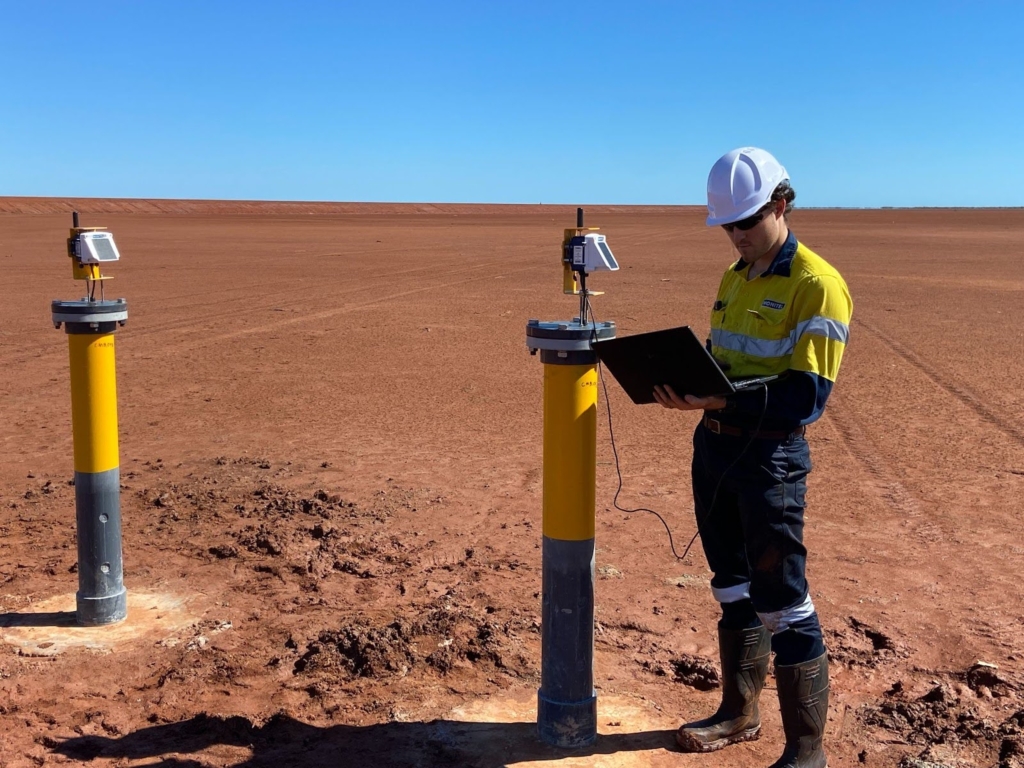
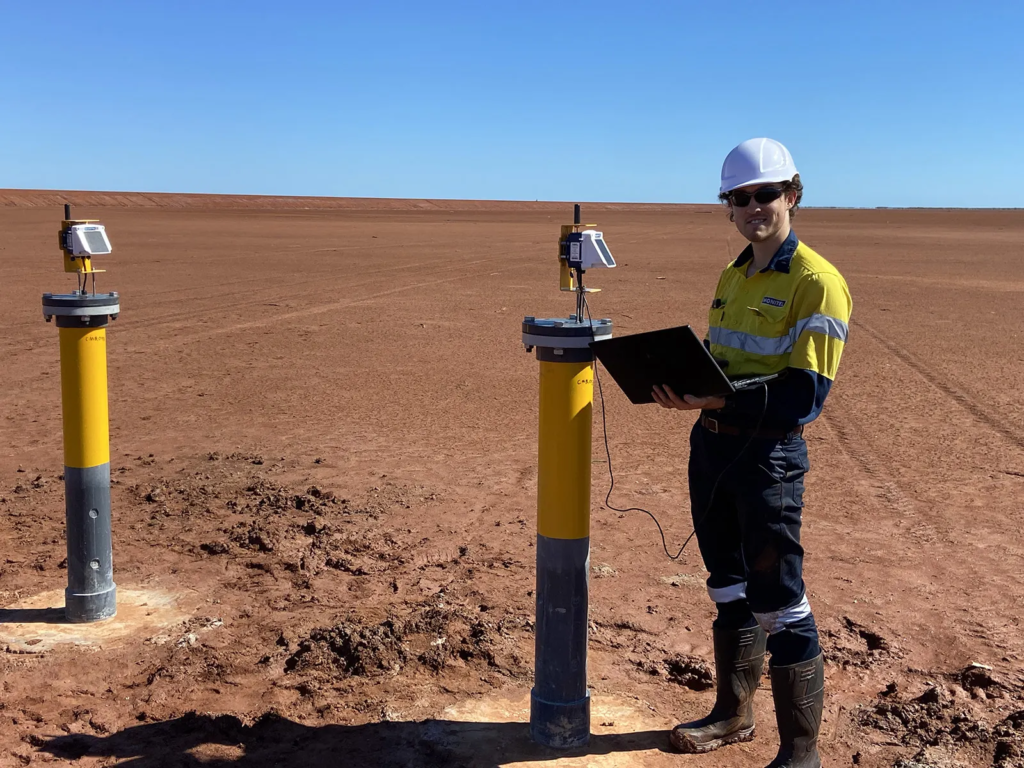
Major WA projects including the Alkimos Desalination Plant (vibrating wire piezometers for pre-load monitoring) and the Mardie Salt & Potash development (60 CT2X sensors deployed across 50 km for continuous environmental monitoring) demonstrate our capability at scale.
Complete end-to-end service
One provider from assessment through installation, commissioning, and ongoing data delivery eliminates the coordination risk and accountability gaps that plague multi-contractor approaches.

Local presence and rapid response
Based in WA with the ability to provide ongoing groundwater monitoring support, maintenance, and troubleshooting without waiting for interstate mobilisation.
Proven Results in WA Projects
Results demonstrate what our process delivers in practice.

Alkimos Desalination Plant
Vibrating wire piezometers installed to monitor pore water pressure during pre-load earthworks. Continuous automated data enabled construction teams to track ground response in real time, supporting safe loading schedules and ensuring environmental compliance throughout the construction phase.
Mardie Salt & Potash Project
Sixty CT2X sensors deployed across a 50 km monitoring network for continuous environmental compliance monitoring. The system delivers real-time groundwater levels, electrical conductivity, and temperature data, providing the operational and regulatory data needed to manage groundwater resources across a vast development footprint.
Who We Help
Monitel’s groundwater monitoring bore services are built for organisations that need defensible data, not just installed equipment:

Mining companies
Environmental compliance monitoring for mining activities, tailings storage facilities, dewatering operations, and closure planning. Monitoring bores assist in managing groundwater levels to prevent over-extraction while helping detect contaminants like heavy metals from operational processes. Effective contaminant tracking is enabled by monitoring bores at various depths across the mine footprint.

Infrastructure developers
Construction dewatering monitoring, pre-load pore pressure assessment, and long-term asset protection for embankments, roadworks, and major civil projects. Groundwater monitoring supports environmental compliance in construction and mining projects.
Utility operators
Construction dewatering monitoring, pre-load pore pressure assessment, and long-term asset protection for embankments, roadworks, and major civil projects. Groundwater monitoring supports environmental compliance in construction and mining projects.

Environmental consultants
Reliable data for hydrogeological studies, contamination assessment, and regulatory reporting. Monitoring networks track pollutants in proximity to contaminated sites or industries, providing the evidence base consultants need.

Government agencies
Monitoring groundwater dependent ecosystems, tracking urban development impacts on groundwater systems, and managing water resource allocation. Groundwater monitoring is critical for managing urban development impacts across growing metropolitan areas like Perth. Bores are also used in assessing the impacts of rainfall and irrigation on groundwater quality.
Our Monitoring Solutions
Standpipe piezometers
Simple, robust observation wells using screened intervals and water columns. Suitable for permeable aquifers where manual or periodic automated water level measurement is sufficient. Cost-effective for sites with moderate monitoring frequency requirements.
Vibrating wire piezometers (VWPs)
Diaphragm sensors providing fast, accurate pore water pressure measurement. Available in sand-packed, fully grouted, and multi-level configurations. Essential for low-permeability formations, tailings facilities, and embankments where rapid pressure response detection is critical.
CT2X multi-parameter sensors
Continuous measurement of water levels, electrical conductivity, and temperature in a single sensor. Ideal for environmental compliance networks requiring water quality monitoring alongside level data.
Submersible pressure transducers
Versatile sensors for water level monitoring across a range of bore depths and diameters. Monitoring wells typically have a diameter of 2 to 6 inches, and our transducer selection accommodates this full range.
Telemetry and data management
Wireless nodes, solar-powered loggers, and cloud-based platforms with real-time dashboards, automated alerts, and structured compliance reporting. All systems include fallback manual measurement capability.
Maintenance and support services
Scheduled inspection of headworks, sensor health verification, calibration checks, telemetry power management, and bore rehabilitation. Monitoring bores must comply with Minimum Construction Requirements in Australia throughout their operational life, and our maintenance programs ensure continued compliance.
Integration services
Connection with existing monitoring networks, compliance reporting systems, and third-party platforms to deliver consolidated groundwater management data across multi-site operations.
Case Studies
Monitel has delivered groundwater monitoring solutions across a range of Western Australian projects, from large-scale mining operations to urban infrastructure and industrial facilities.
Mining Operations
At the Mardie Salt and Potash project, groundwater monitoring focuses on environmental compliance and preserving sensitive ecosystems. This operation is situated in ecologically significant areas with habitats such as Triodia grasslands and algal mats in "good" to "excellent" condition that require protection. Extensive networks of monitoring bores equipped with telemetry provide real-time tracking of groundwater levels and salinity. Monitel automates this data collection to promptly detect any changes that could impact benthic communities or subterranean fauna, enabling rapid management actions to avoid regulatory fines or legal consequences.
Infrastructure Projects
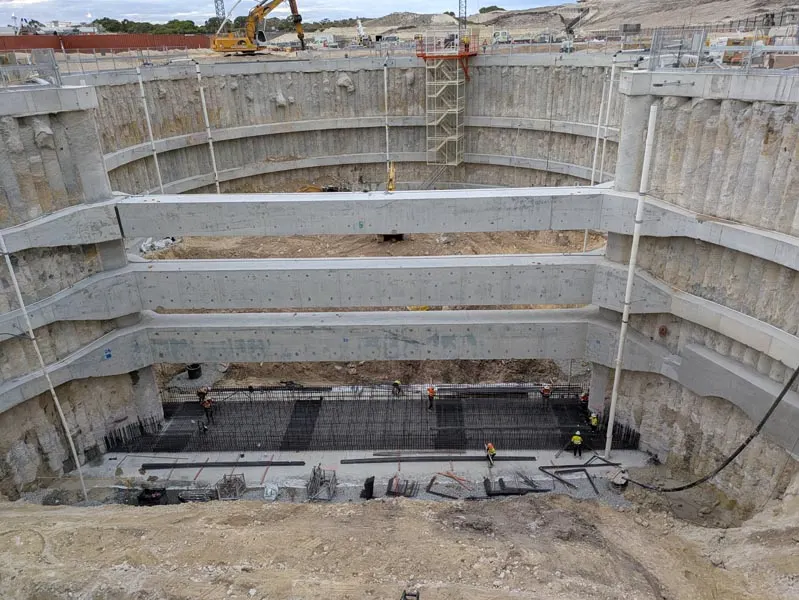
The Alkimos Desalination Plant relies on advanced groundwater monitoring to support safe construction in highly permeable soils. Automated dewatering and real-time aquifer monitoring help maintain structural stability during marine and tunneling works. Monitel provides high-precision hydrostatic level transmitters for continuous groundwater data. Additional monitoring manages noise and vibration impacts from piling activities. This ensures environmental compliance and supports safe, efficient project delivery.
Industrial Facilities
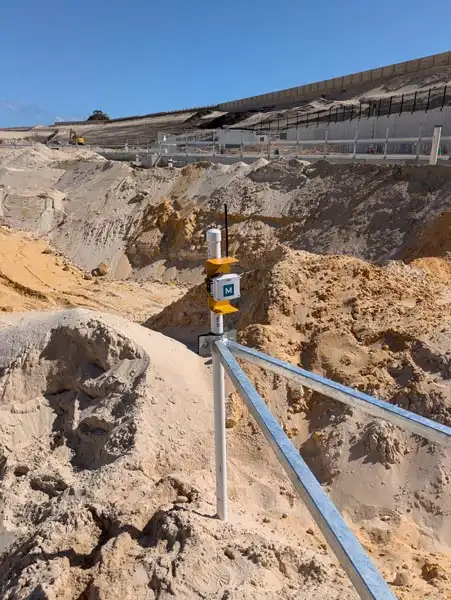
Long-term groundwater monitoring is essential for processing plants and industrial facilities to manage contamination risks such as PFAS, heavy metals, and hydrocarbons. Monitel provides automated monitoring systems with cloud-based data access, compliance reporting, and real-time alerts. Continuous monitoring enables early detection of groundwater quality changes, helping prevent costly environmental impacts. Tailored borehole instrumentation ensures reliable, long-term compliance with site-specific regulatory requirements.
Frequently Asked Questions
What is a groundwater monitoring bore?
A groundwater monitoring bore is a specialised borehole constructed not for water supply but specifically to access underground aquifers for measurement and sampling purposes. Groundwater monitoring bores are specialised wells accessing underground aquifers, designed to measure groundwater levels, pore water pressure, groundwater flow direction, and groundwater quality parameters including salinity, pH, electrical conductivity, dissolved oxygen, and contaminants. They are essential tools for environmental management, regulatory compliance, and sustainable groundwater management. Monitoring bores are essential for protecting groundwater sources from contamination and provide real-time data crucial for groundwater management.
Key components include appropriately sized casing (typically 50 mm or larger internal diameter), screened intervals matched to formation characteristics, filter pack, annular seals, and surface headworks. Monitoring wells are small-diameter boreholes for groundwater access and can be installed at various depths for different purposes. Typical diameters for monitoring wells range from 2 to 6 inches.
What is the difference between a monitoring bore and a water bore?
Water bores (production bores) are designed to extract groundwater for water supplies – irrigation, drinking water, industrial use. They prioritise flow rate, volume, and long-term yield. Monitoring bores serve a fundamentally different purpose: they are constructed to measure and sample groundwater without significantly altering aquifer conditions.
Construction standards differ substantially. Monitoring bores have stricter requirements for casing materials, screen design, sealing, and prevention of cross contamination between aquifer zones to protect data integrity. They must comply with environmental approvals and regulatory guidelines that focus on data quality rather than extraction performance. The Minimum Construction Requirements for Water Bores guide bore installation standards for both types, but monitoring bore design prioritises representative measurement over water production.
How deep should a monitoring well be?
Depth depends entirely on the hydrogeological objectives and target aquifer characteristics. The bore must intercept the aquifer or formation zone of interest, with screens positioned below the lowest historical water table by a suitable margin – often at least 3 m. In WA mining contexts, monitoring bores are commonly drilled to 50–60 m to reach bedrock aquifers, though shallower installations may be appropriate for water table monitoring in unconfined aquifers.
Multi-level monitoring installations allow measurement at multiple depths within a single borehole, providing vertical profiles of pressure and water quality without drilling separate bores for each zone. Monitoring wells can be installed at various depths for different purposes, and the optimal configuration should be determined through careful planning and hydrogeological assessment during the design phase.
How accurate is automated groundwater monitoring?
Modern vibrating wire piezometers with temperature compensation typically exhibit less than 0.025% full scale per °C error, providing highly accurate pore water pressure measurement. CT2X sensors deliver continuous water level, conductivity, and temperature data with specifications suitable for regulatory compliance.
Accuracy depends not only on sensor specifications but also on installation quality, calibration procedures, and ongoing data correction. Groundwater monitoring must align with data quality objectives for compliance, and our quality assurance procedures include temperature compensation, barometric pressure correction, density adjustments for deep or saline bores, and periodic verification against manual dip measurements. Environmental regulators issue compliance guidelines for groundwater monitoring, and our datasets are structured to meet these requirements. Monitoring wells help detect pollutants and assess contamination spread with the precision that regulatory authorities demand.
What maintenance is required for monitoring bores?
Regular maintenance ensures long-term system performance and data quality. Key activities include periodic inspection of headworks and casing integrity, checking that screens and sensors are not blocked by sediment or mineral precipitation, verifying sensor calibration against reference measurements, managing telemetry battery and solar power systems, and cleaning sensors as needed.
Bore development may need to be repeated if sediment infiltration degrades water quality parameters. Telemetry systems require firmware updates, communication checks, and power supply maintenance. Monitel provides scheduled maintenance programs tailored to site conditions, with rapid response capability for unplanned issues. A well-maintained monitoring bore network delivers reliable data for the full project lifecycle.
Get Started with Reliable Groundwater Monitoring
If unreliable monitoring data, compliance risk, or fragmented contractor management is costing your project time and money, the next step is straightforward.
Contact Monitel to discuss your site-specific requirements. We’ll assess your groundwater monitoring needs and design a solution that delivers defensible, audit-ready data from day one – whether you need a single monitoring bore or a network spanning dozens of sites.
Our complete groundwater monitoring solutions cover everything from initial hydrogeological assessment through bore design, installation, commissioning, and long-term automated monitoring with ongoing support. Browse our groundwater monitoring equipment to see the instrumentation options we deploy across WA mining and infrastructure projects.
No data gaps. No compliance surprises. Just groundwater monitoring that works.
Monitel
Trust us to keep you informed about your construction, infrastructure, mining or rail assets.
Contact Us
Office Hours
Monday to Friday
7:00am to 5:00pm