
See our wide range of Geotechnical and Structural sensors
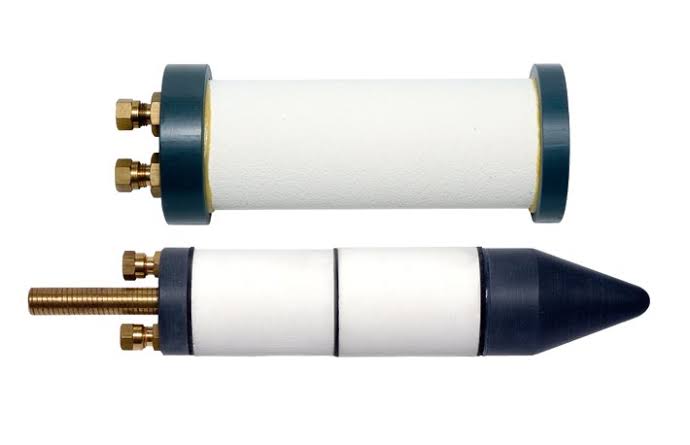

The In-Place Inclinometer (IPI) is a high-precision piece of structural instrumentation designed for continuous monitoring of lateral ground and structural movement. It is commonly used in applications such as retaining walls, deep excavations, landslides and stability assessments. Unlike traditional manual inclinometers, the IPI provides real-time data by being permanently installed within inclinometer casing, allowing for continuous, automated measurements.
The IPI consists of a series of interconnected sensors housed within a durable stainless steel casing. These sensors detect angular movement along a vertical axis, measuring any shifts in soil, rock or structures. The system is available in both uniaxial and biaxial configurations, adopting single or dual-plane monitoring depending on your project requirements. Designed for long-term use, the IPI is built to withstand harsh environmental conditions, including water ingress and high-pressure zones. It seamlessly integrates with remote data acquisition systems, enabling real-time monitoring and early detection of ground movement. The IPI’s modular design allows for flexible installation at varying depths, ensuring comprehensive coverage of monitored areas. With its ability to provide continuous, precise measurements, the IPI is an essential tool for geotechnical monitoring projects, supporting proactive decision-making and enhancing the safety and stability of infrastructure.
The inclinometer spiral sensor is a precision instrument used to detect and measure the twist (or spiral) in inclinometer casings. This data helps to identify casing misalignments, ensuring the accuracy and reliability of tilt measurements in monitoring projects.
This sensor is constructed with a durable stainless steel that makes it reliable in challenging conditions. Despite this, the design is also lightweight, making it practical for field use. Other features and specifications include:

The Viotel Accelerometer is a wireless sensor designed for real-time vibration and acceleration monitoring in geotechnical and structural applications. This compact, battery-powered device provides continuous measurement of ground and structural movement, making it ideal for monitoring bridges, tunnels, dams, buildings and mining operations.
Equipped with triaxial acceleration sensors, the Viotel Accelerometer captures vibration data across three axes, allowing for detailed analysis of structural responses to environmental and operational loads. It offers high sampling rates and low-power consumption, allowing for long-term deployment without frequent maintenance. The wireless connectivity enables seamless data transmission to Viotel’s cloud-based monitoring platform, providing real-time alerts and remote access to data. The system allows engineers to track changes in structural behavior, detect anomalies and intervene to prevent failures. Designed for easy deployment, the Viotel Accelerometer supports automated data logging and integration with existing structural monitoring systems, making it a cost-effective solution for projects requiring continuous vibration monitoring. Its rugged construction ensures durability in harsh environments, delivering precise, actionable insights for infrastructure and asset management.
Made in Australia, the Viotel Wireless Triaxial Tiltmeter (VWTT) is a pre-programmed, ready to mount monitoring device designed to detect and measure angular movements across three axes.
Encased in a durable, UV-stabilised ABS plastic housing, it performs reliably in harsh and diverse environmental conditions. It is entirely self contained, with an internal battery, GPS and cellular CAT-M1 modem all held within the casing.
The VWTT provides high-precision data, working at a resolution of of 0.0003° and an accuracy of 0.001°. Readings are taken at pre-determined intervals that you can configure on the myViotel platform.
Installation can be completed with 3M adhesive backing, 2 bolt holes or a pole mount. This allows versatile deployment suited to your preferred location and orientation.
Event Detection Mode:
The VWTT’s Event Detection Mode enables continuous tilt monitoring every 4 seconds, automatically triggering an alert when movements exceed your pre-set thresholds. This means that structural shifts are detected almost immediately.
Capturing real-time movement data and transmitting alerts via the myViotel platform, this feature allows for rapid response to potential stability risks, helping prevent structural failures and ensuring site safety.
Specifications:

The VWCM-4000 Vibrating Wire Crack Meter is a precise structural instrument designed to monitor crack movement in concrete, rock and masonry structures. It measures changes in crack width with high accuracy, making it ideal for structural health and stability monitoring in bridges, dams, retaining walls and buildings.
Using vibrating wire technology, it converts displacement into a frequency signal, a signal that transfers reliable data with minimal degradation over time. The stainless steel construction provides durability in harsh environmental conditions, including exposure to water, temperature fluctuations and corrosive elements. The VWCM-4000’s sensor is capable of detecting even the smallest movements, allowing engineers to assess crack behaviour and identify potential structural issues before they escalate. It is available in various gauge lengths and can be installed across surface cracks or embedded in joints. Compatible with automated data logging systems, the VWCM-4000 supports real-time monitoring and remote access to data. Its low-maintenance design allows long-term deployment, making it a cost-effective solution for projects requiring continuous crack movement assessment and structural integrity monitoring.
The VWS-2000 Surface-Mount Vibrating Wire Strain Gauge is a high-precision sensor designed to measure strain in structural and geotechnical applications. Using vibrating wire technology, it provides accurate, long-term strain monitoring for a wide range of materials, including steel, concrete and rock. This sensor is commonly used in monitoring bridges, retaining walls, dams and structural beams, allowing engineers to assess load distribution, stress changes and structural integrity over time.
The VWS-2000 consists of a robust stainless steel body with mounting brackets for secure attachment to surfaces. The gauge measures strain by detecting frequency shifts in the vibrating wire, ensuring high accuracy, stability and resistance to temperature fluctuations. With a gauge length of 150 mm, it captures precise strain measurements while maintaining durability in harsh environments. This strain gauge is compatible with automated data logging systems, enabling real-time monitoring and remote access to data. Its low-maintenance design ensures long-term performance, making it ideal for critical infrastructure projects.