
Groundwater Monitoring Services
Monitel provides end-to-end groundwater monitoring services for mining, infrastructure and environmental projects across Western Australia.
Whether you need to monitor groundwater levels around an active dewatering operation, track groundwater quality beneath a tailings facility, or meet environmental approval conditions for a new mine, our services cover automated monitoring systems, regulatory compliance reporting and long-term data collection. We are a complete solution provider – from instrumentation selection, installation and comissioning through to calibration, data management and ongoing support – not just an equipment supplier.
Request a Monitoring Consultation
Whether you're planning a new project or upgrading an existing monitoring system, our experts are here to help.
Types of Groundwater Monitoring
Groundwater monitoring requirements vary significantly depending on the application, risk profile and regulatory obligations.
Here is how our services break down:
Environmental Compliance Monitoring
Automated monitoring designed for mining and infrastructure projects that must satisfy environmental approval conditions, ministerial statements and water licence obligations under Western Australia's Rights in Water and Irrigation Act 1914. Monitoring supports regulatory compliance with environmental legislation by tracking abstraction volumes, water levels in aquifers, drawdown impacts, and groundwater quality parameters. This type of monitoring is critical for projects affecting groundwater dependent ecosystems, public drinking water source areas, or managed aquifer recharge schemes.
Construction Dewatering Monitoring
Real-time monitoring for excavations, tunnels and major construction projects where changes in groundwater levels or pressures could destabilise ground conditions or cause inflows. Perth relies heavily on groundwater for drinking water and industry, making careful dewatering management essential during urban construction. This is especially important due to our sandy coastal geology. Telemetry systems allow real-time monitoring data access so that project teams can make informed decisions about pumping rates, ground stability and environmental impact as conditions change.
Long-term Asset Monitoring
Continuous monitoring for tailings storage facilities, dams, processing plants and other industrial infrastructure where ongoing operational safety and environmental stewardship demand reliable, defensible datasets over years or decades. This includes post-closure monitoring for mine sites, where groundwater recovery and water quality trends must be tracked to satisfy regulatory conditions. Data from monitoring can assist in sustainable resource management and long-term closure planning.
What to Look For in Groundwater Monitoring
The effectiveness of any monitoring program depends on the technical attributes of the instrumentation, data acquisition and equipment selection.
Here are the key factors that determine whether your monitoring system delivers reliable, defensible data.
Sensor Accuracy and Calibration
Precise measurement is the foundation of any monitoring program. Sensor accuracy is typically expressed as a percentage of full scale – for example, a pressure transducer with a 10 m range and 0.05% accuracy delivers ±5 mm precision, while a 100 m range sensor at the same accuracy grade gives ±50 mm. Selecting sensors whose range matches the expected variation in water levels is therefore crucial for obtaining meaningful data. Regular testing detects potential pollutants in groundwater, but only if sensor calibration is maintained. Inaccurate data can increase long-term project costs in groundwater monitoring through flawed engineering decisions, missed compliance triggers or unnecessary remediation. At minimum, annual manual spot checks against independently measured water levels are required under national guidelines to detect instrument drift, cable stretch or sensor movement.
Automated Data Acquisition
Automated monitoring systems transmit data remotely to databases, replacing labour intensive manual measurement programs with continuous, high-frequency datasets. Automatic groundwater monitoring systems transmit data remotely, enabling cloud-based reporting and real-time alerts without requiring personnel on site. Continuous monitoring improves safety and reduces site visits – a significant advantage for remote Western Australian operations in the Pilbara, Goldfields or Mid West where travel costs and safety risks are substantial. Automated systems provide higher monitoring frequency than manual methods, capturing transient events such as rapid drawdown during dewatering, tidal or barometric responses, or sudden quality changes that manual monthly or quarterly sampling would miss entirely. Automated monitoring reduces labor costs for groundwater assessments while delivering richer, more defensible datasets for regulatory reporting.
Environmental Suitability
Equipment must be selected to suit site conditions – bore depth, expected water level fluctuations, salinity, temperature extremes and accessibility all influence the right choice. In Western Australia’s harsh environments, sensors and cables must withstand high salinity and corrosion (316 stainless steel construction is standard), protective housings must shield electronics from dust and heat, and vent tubes on vented pressure transducers must be protected from moisture ingress. The choice between vented and non-vented (absolute) pressure sensors depends on the application: vented sensors offer greater accuracy in shallow, stable environments, while non-vented sensors requiring barometric compensation are generally preferred for deeper bores or where large water level fluctuations occur. Groundwater quality is vulnerable to contamination from heavy metals and pesticides, so multi-parameter water quality sondes measuring pH, temperature, conductivity, nitrates and other parameters may also be required depending on monitoring objectives.
How to Choose the Right Groundwater Monitoring Solution
Choosing the right monitoring approach requires matching technical capability to project-specific demands.
Here are the key criteria that determine the appropriate solution.
Monitoring objectives
Whether you need to assess compliance with environmental approvals, manage construction dewatering safely, or monitor long-term asset performance fundamentally shapes the system design. Groundwater monitoring helps in assessing the environmental impacts on ecosystems, but a construction dewatering program has very different instrumentation, frequency and reporting needs compared with a GDE impact assessment.
Site conditions
Aquifer depth, bore characteristics, freshwater versus hyper-saline environments, power availability and telemetry coverage all influence equipment selection. Complex hydrogeology complicates defining sustainable extraction limits, making it important to match sensor range and accuracy to the expected conditions rather than applying a generic specification. Remote sites without mains power require solar-powered telemetry and efficient battery management.
Data requirements
Monitoring frequency, accuracy needs and reporting obligations vary widely. Manual monitoring using a dipper to measure groundwater levels may be suitable for stable, low-risk sites on a monthly or quarterly schedule. Active dewatering or sensitive ecosystem monitoring typically demands hourly or sub-hourly automated logging with real-time alerts. Groundwater quality is assessed using over 40 parameters in detailed assessments, while routine compliance monitoring may focus on a smaller suite. Monitoring data helps ensure the health of groundwater-dependent ecosystems when collected at appropriate frequency and resolution.
Project timeline
Temporary construction dewatering monitoring has different cost, installation and decommissioning considerations compared with permanent infrastructure monitoring that may need to operate reliably for decades. Monitoring ensures withdrawals from aquifers do not exceed sustainable recharge rates over the operational life of a project and through post-closure recovery.
Case Studies
Monitel has delivered groundwater monitoring solutions across a range of Western Australian projects, from large-scale mining operations to urban infrastructure and industrial facilities.

Mining Operations
At the Mardie Salt and Potash project, groundwater monitoring focuses on environmental compliance and preserving sensitive ecosystems. This operation is situated in ecologically significant areas with habitats such as Triodia grasslands and algal mats in "good" to "excellent" condition that require protection. Extensive networks of monitoring bores equipped with telemetry provide real-time tracking of groundwater levels and salinity. Monitel automates this data collection to promptly detect any changes that could impact benthic communities or subterranean fauna, enabling rapid management actions to avoid regulatory fines or legal consequences.
Infrastructure Projects
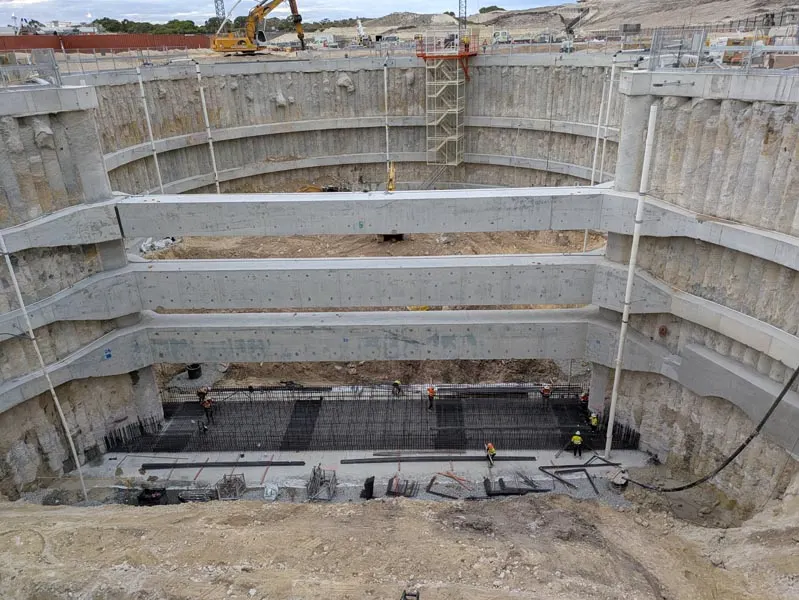
The Alkimos Desalination Plant relies on advanced groundwater monitoring to support safe construction in highly permeable soils. Automated dewatering and real-time aquifer monitoring help maintain structural stability during marine and tunneling works. Monitel provides high-precision hydrostatic level transmitters for continuous groundwater data. Additional monitoring manages noise and vibration impacts from piling activities. This ensures environmental compliance and supports safe, efficient project delivery.
Industrial Facilities
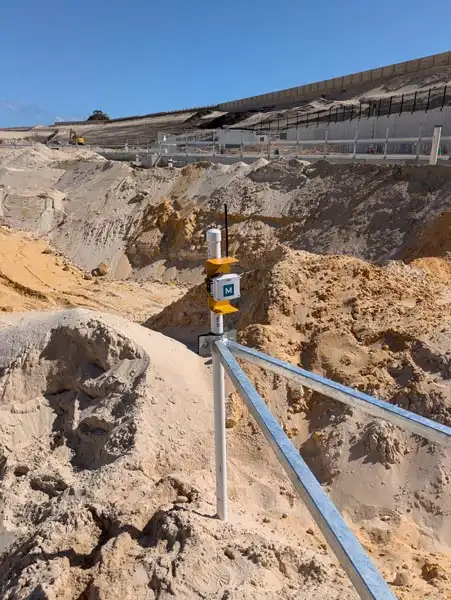
Long-term groundwater monitoring is essential for processing plants and industrial facilities to manage contamination risks such as PFAS, heavy metals, and hydrocarbons. Monitel provides automated monitoring systems with cloud-based data access, compliance reporting, and real-time alerts. Continuous monitoring enables early detection of groundwater quality changes, helping prevent costly environmental impacts. Tailored borehole instrumentation ensures reliable, long-term compliance with site-specific regulatory requirements.
Frequently Asked Questions
What is groundwater monitoring?
Groundwater monitoring is the systematic measurement and analysis of groundwater levels, pressures and quality over time using monitoring bores, piezometers and associated instrumentation. Groundwater monitoring assesses water quality and quantity over time, tracking parameters such as pH, temperature, salinity, nitrates, potential contaminants and other indicators relevant to the site. It supports environmental compliance and operational decision-making for mining, construction and industrial projects. Groundwater monitoring measures pH, temperature, and nitrates among other parameters, with quality assessed using over 40 parameters in comprehensive programs. Groundwater monitoring can include satellite data for analysis in some applications, complementing ground-based instrumentation. Monitoring involves drilling boreholes for testing and installing sensors connected to data loggers or telemetry systems that transmit readings to central databases.
Why is groundwater monitoring important?
Groundwater is an important source of water across Australia – groundwater accounts for 30% of Australia’s water consumption, and groundwater provides drinking water for up to 50% of the population nationally. In Western Australia, groundwater resources underpin mining operations, agricultural irrigation, urban water supply and ecological systems. Groundwater monitoring is essential for informed groundwater management decisions: it manages risk for construction and mining operations, ensures compliance with environmental legislation, and protects groundwater resources and ecosystems from degradation or contamination. Monitoring supports regulatory compliance with environmental legislation including WA’s Rights in Water and Irrigation Act 1914 and Environmental Protection Act. Groundwater monitoring tracks the risk of saline intrusion in coastal areas and identifies trends in water levels that may indicate unsustainable extraction or changing recharge patterns. Regular testing detects potential pollutants in groundwater before contamination becomes widespread or irreversible.
How often should groundwater be monitored?
Monitoring frequency depends on regulatory requirements, project risk and operational needs. For stable, low-risk sites, manual monitoring undertaken monthly or quarterly may be sufficient. Active dewatering operations, sensitive ecosystems and construction projects typically require continuous automated monitoring at hourly or sub-hourly intervals to capture rapid changes. National guidelines require at least annual spot checks of automated sensors and regular calibration to maintain data integrity. Higher monitoring frequency enables early detection of problems – unexpected drawdown, quality deterioration, or pressure changes – allowing proactive management rather than reactive correction. The monitoring frequency should be justified in the monitoring program and aligned with WA’s Water in Mining Guideline, relevant Water Quality Protection Notes and specific licence conditions.
What industries require groundwater monitoring?
Mining operations require groundwater monitoring for environmental approvals, dewatering management, water use reporting and surplus water management. Construction projects involving excavations, tunnelling and foundation work need dewatering monitoring to manage ground stability and environmental impact. Industrial facilities including processing plants, landfill sites, chemical storage and tailings facilities require ongoing monitoring for compliance and risk management. Infrastructure development affecting groundwater systems – including managed aquifer recharge, water supply bores and irrigation schemes – also demands systematic monitoring. Government agencies undertake monitoring for water resource allocation, environmental assessment and public health protection.
Why shouldn't I just use a piezometer for every borehole?
While piezometers are excellent for measuring point-specific pore water pressure or soil leak detection, they may not be the correct choice for open groundwater wells where a hydrostatic level transmitter provides a more accurate overall water table reading. Piezometers measure pressure at a specific point within the soil or rock, which can be useful for geotechnical assessments, but hydrostatic level transmitters capture the total water column pressure, offering a better representation of groundwater levels in open boreholes.
Can your sensors handle hypersaline or corrosive environments?
Yes. We provide material options specifically engineered for high-performance in aggressive conditions. Our standard robust option is Stainless Steel (316), suitable for typical groundwater and surface water monitoring. For hypersaline environments, brackish water, or acidic mine drainage, we offer Titanium construction sensors that provide enhanced corrosion resistance and durability to ensure reliable long-term operation.
How deep can your sensors be installed?
Our sensor selections are available in a variety of pressure PSI ratings tailored to the depth of your borehole or monitoring well. Groundwater depth is generally calculated as approximately 0.7 meters per 1 PSI, depending on water density. This allows us to match sensor pressure ratings precisely to site conditions, ensuring accurate measurements across a wide range of borehole depths.
What equipment does Monitel use for groundwater monitoring?
Monitel selects instrumentation based on a technology-agnostic approach, choosing the best equipment for each application rather than defaulting to a single product range. Our systems include submersible pressure transducers (both vented and non-vented types), vibrating-wire piezometers, strain-gauge transducers, and multi-parameter water quality sensors. Data acquisition uses robust data loggers connected via telemetry to cloud-based platforms for remote data access and automated reporting. All sensors and equipment are selected for environmental suitability – corrosion-resistant materials, reliable operation in temperature extremes, and appropriate accuracy for the expected measurement range.
How does automated monitoring compare to manual monitoring?
Manual monitoring uses a dipper to measure groundwater levels and requires personnel to visit each bore for groundwater sampling and measurement – a process that is labour intensive, costly for remote sites, and limited to the frequency of site visits. Automated monitoring can improve efficiency and reduce project risks by providing continuous data streams, real-time alerts when triggers are exceeded, and cloud-based reporting that reduces the administrative burden of compliance. Continuous monitoring improves safety and reduces site visits, which is particularly valuable across Western Australia’s remote mining regions. Automated systems deliver higher monitoring frequency than manual methods, capturing transient events and trends that periodic manual measurement would miss. However, automated systems still require regular calibration, maintenance and manual spot checks to ensure data quality and sensor accuracy.
Get Started with Groundwater Monitoring
Monitel
Trust us to keep you informed about your construction, infrastructure, mining or rail assets.
Contact Us
Office Hours
Monday to Friday
7:00am to 5:00pm